Casino Aggregator vs Direct Integration: Which Is Right for You?
A casino aggregator gives you one API, one wallet contract and one support line covering 150+ studios and 14,000+ games, so you launch in days. Direct integration means building and maintaining a separate connection to every studio yourself. Direct can suit a very large operator chasing a bespoke deal with one or two flagship studios. For almost everyone else, aggregation wins on speed, cost and breadth.
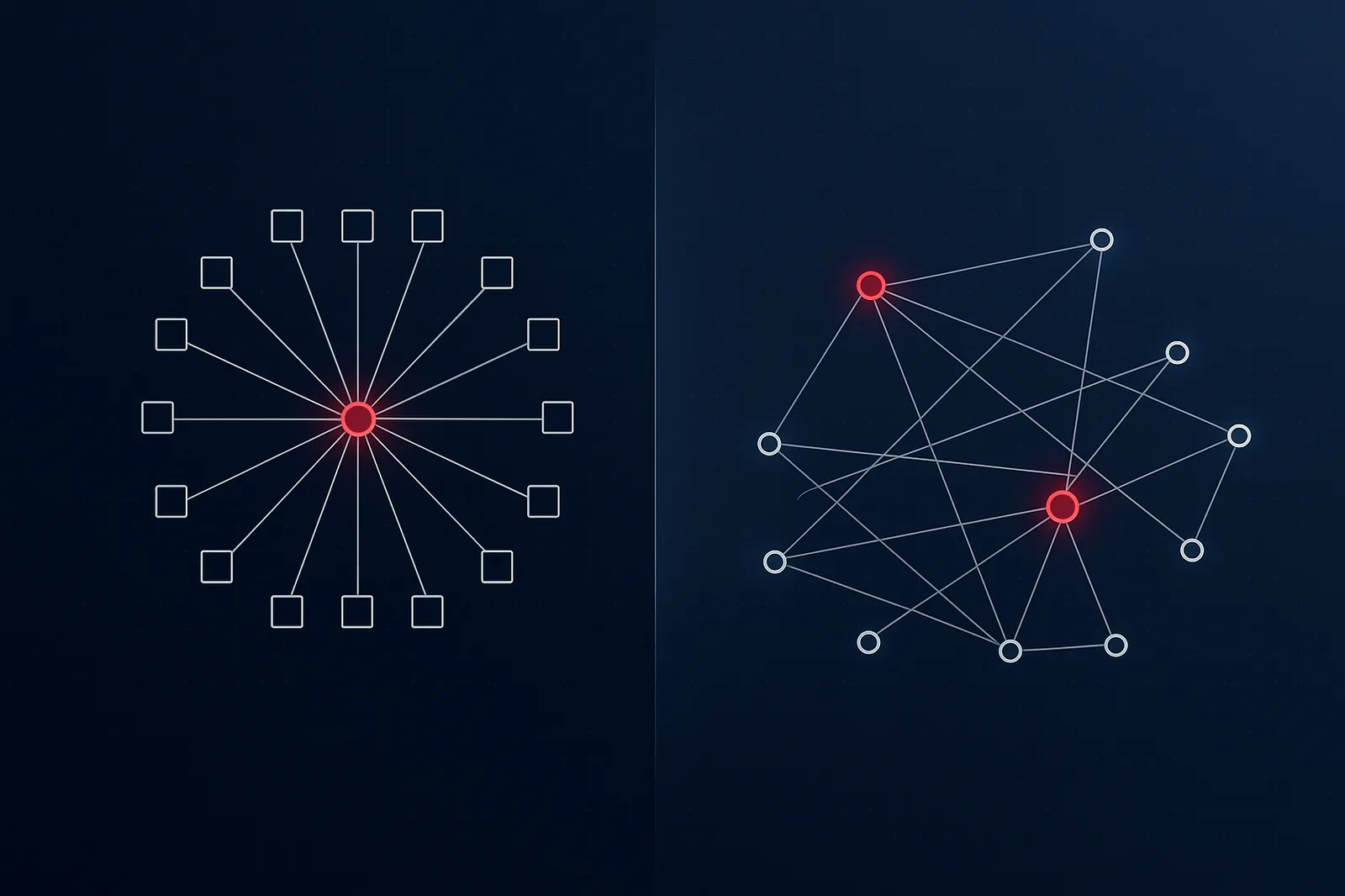

In short: A casino aggregator gives you one API, one wallet contract and one support line covering 150+ studios and 14,000+ games, so you launch in days. Direct integration means building and maintaining a separate connection to every studio yourself. Direct can suit a very large operator chasing a bespoke deal with one or two flagship studios. For almost everyone else, aggregation wins on speed, cost and breadth.
Choosing a casino aggregator versus direct integration is one of the first infrastructure decisions an online operator makes, and it shapes your engineering roadmap for years. Both models put studio content in front of your players, but they distribute the work, cost and risk very differently. This guide explains how each approach works, weighs the trade-offs fairly, and helps you decide which fits your business today.
What a casino aggregator actually does
A casino aggregator is a single technical layer that sits between your platform and dozens of game studios. Instead of contracting and connecting to each provider one at a time, you integrate the aggregator once and inherit its entire catalogue.
With IOP Global, that one API fronts 150+ studios and 14,000+ certified games. You sign one wallet contract, consume one consolidated report feed, and work with one point of support. When a new studio joins the network, its games become available to you without a new build or a new integration fee.
The key detail is consistency: the wallet contract and the launch call never change from one studio to the next. Integrating a single game is effectively the work required to integrate them all. RTPs are set and certified by the providers themselves, so you receive certified content without touching game logic.
Beyond the catalogue itself, an aggregator standardises the pieces around it. Cross-provider bonus tools, a unified wallet and consolidated reporting all work the same way regardless of which studio produced a given game. That uniformity is what lets a small commercial or product team run a large, multi-studio lobby without a proportionally large engineering headcount behind it.
How direct integration works
Direct integration means building and maintaining a one-to-one connection with each studio you want to offer. For every provider, your team negotiates its own commercial contract, completes its certification requirements, maps its wallet and transaction model to yours, and then owns that connection indefinitely.
Each studio typically takes weeks to months to bring live, and every connection carries ongoing maintenance: API version changes, new game onboarding, incident handling and compliance updates all land on your engineering team. 10 studios means 10 contracts, 10 certifications and 10 codepaths to keep healthy, forever.
The upside is control. A direct deal can be tailored, commercially and technically, to exactly what you want from a specific studio, with no intermediary in the revenue path or the data flow. For an operator with the scale and engineering depth to absorb that ownership, the directness itself can be an asset.
Casino aggregator vs direct integration compared
The table below summarises how the two models differ across the dimensions operators care about most.
| Factor | Casino aggregator | Direct integration |
|---|---|---|
| Time to live | Days after one integration | Weeks to months per studio |
| Studios per integration | 150+ from a single API | One studio per build |
| Maintenance | Handled by the aggregator | Owned by your team, per studio |
| New-provider effort | Added with no new build or integration fee | A full new project each time |
| Wallet & reporting | One wallet contract, one consolidated feed | Separate mapping and reports per studio |
| Contracts & support | One contract, one point of support | Individual contract and support per studio |
| Best for | New and growing operators, broad catalogues fast | Very large operators with big engineering capacity |
Weighing the trade-offs
Speed is the most visible difference. An aggregator can put a broad, multi-studio lobby live in days because the hard integration work is done once. Direct integration front-loads weeks or months of engineering per studio before a single game goes live.
Cost follows a similar pattern. With direct integration you pay in engineering time, both upfront and in perpetual maintenance. An aggregator concentrates that effort into one connection, and on the IOP Global network new studios are added at no extra integration cost, so your catalogue can grow without your build budget growing with it.
Breadth is where aggregation is hardest to match. Reaching 14,000+ games through direct deals would mean managing well over 100 parallel relationships. Through an aggregator, that same breadth arrives behind one API and one report feed, with support consolidated to a single team rather than spread across every studio's own channels.
Direct integration is not without merit, though. It gives you a direct commercial and technical relationship with the studio, which a very large operator may value when negotiating a bespoke deal around one or two flagship brands. If you have the engineering capacity to build and maintain those connections, and the volume to justify it, a direct arrangement can make sense for a narrow, high-priority catalogue.
Risk is worth naming too. Every direct connection you own is a connection you must monitor, patch and certify as studios evolve their APIs and as regulators update requirements. An aggregator absorbs much of that operational surface area, but it does place a partner between you and the studio, so the choice is partly about how much of that responsibility you want to hold in-house.
Which casino aggregator model is right for you?
For new and growing operators, the calculus usually favours the casino aggregator. You get to market quickly, offer a deep and varied catalogue from day one, and keep your engineering team focused on your product rather than on maintaining dozens of studio connections. Cross-provider bonuses, a unified wallet and consolidated reporting come as part of the package rather than as separate projects.
A hybrid approach is also common and entirely reasonable: use an aggregator for breadth and speed across the market, and pursue a direct deal only where a specific flagship studio and your scale genuinely warrant the extra investment. That way the bulk of your catalogue stays low-maintenance while your standout partnerships get bespoke treatment.
The honest answer is that the right choice depends on your size, your engineering capacity and your commercial priorities. What is consistent is the pattern: aggregation trades a little control for a lot of speed, breadth and simplicity, while direct integration trades speed and simplicity for maximum control at a much higher operational cost.
Talk it through with IOP Global
If you want to see how quickly a broad catalogue could go live on your platform, explore the casino API and how the casino game aggregator brings 150+ studios together behind one integration. When you are ready to map it to your roadmap, get in touch and we will walk through the options with you.
Questions operators ask
What is a casino aggregator?
A casino aggregator is a single technical layer that connects your platform to many game studios at once. With IOP Global, one API fronts 150+ studios and 14,000+ certified games, with one wallet contract, one report feed and one point of support.
How is direct integration different from using an aggregator?
Direct integration means building and maintaining a separate one-to-one connection to each studio, including its own contract, certification and wallet mapping. An aggregator replaces those many builds with a single integration that covers the whole network.
Is a casino aggregator faster than direct integration?
Generally yes. Because the integration work is done once, an aggregator can bring a broad, multi-studio lobby live in days, whereas direct integration typically takes weeks to months per studio before any game goes live.
When does direct integration make sense?
Direct integration can suit a very large operator with significant engineering capacity that wants a bespoke commercial and technical deal with one or two flagship studios. Many operators use a hybrid: an aggregator for breadth, plus a direct deal for select flagship partnerships.
Do I have to re-integrate for each new studio on an aggregator?
No. On the IOP Global network the wallet contract and launch call never change between studios, so new studios are added without a new build or integration fee. Integrating one game is effectively the work to integrate them all.
Launch faster. Scale further.
Connect your casino to 14,000+ games from 150+ studios through one integration.
Talk to our team