How Casino Payments & PSPs Work: An Operator's Guide
An iGaming payment gateway is the layer that routes player deposits and withdrawals between your casino and the payment service providers (PSPs) that move the money. Because players expect their own local method, operators connect to many PSPs at once - usually through a single aggregator - to lift approval rates, localise by market, settle faster, and keep KYC and AML checks at the cashier.

In short: An iGaming payment gateway is the layer that routes player deposits and withdrawals between your casino and the payment service providers (PSPs) that actually move the money. Because players expect their own local method, operators connect to many PSPs at once, usually through a single aggregator, to lift approval rates, localise by market, settle faster, and keep KYC and AML checks at the cashier.
Ask any casino operator where they lose the most revenue and the answer is rarely the game floor. It is the cashier. A player picks a bonus, clicks deposit, and then meets a payment form that does not offer their bank, their wallet, or their currency. They leave. This guide explains how an iGaming payment gateway works, why a single PSP is never enough, and how operators reach hundreds of methods through one connection.
What an iGaming payment gateway and a PSP actually do
A payment service provider (PSP) is a licensed company that processes a specific set of payment methods: a card acquirer, a bank-transfer rail like PIX or SEPA, an e-wallet, or a crypto processor. Each PSP handles authorisation, capture, and settlement for the methods it supports.
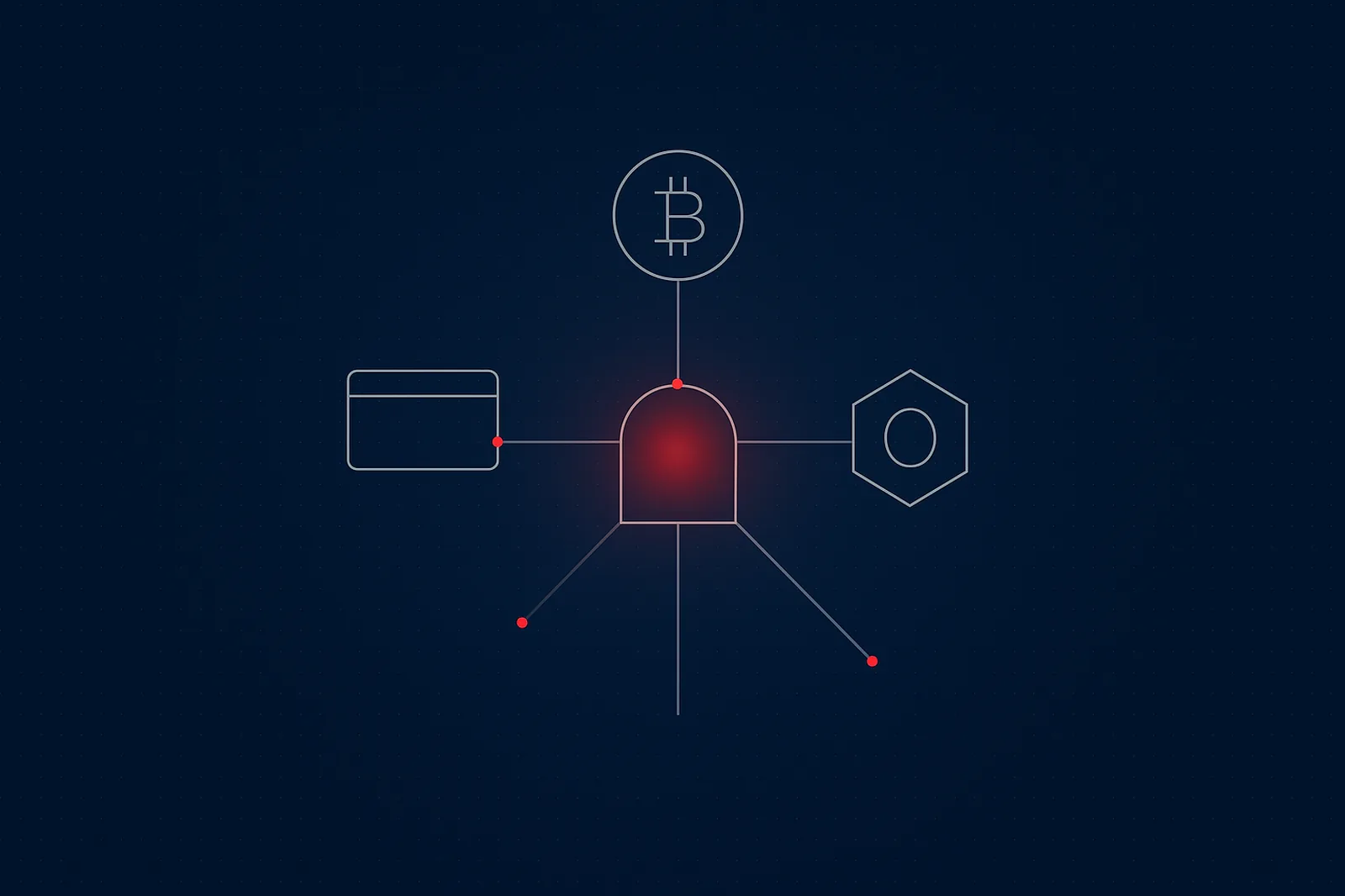
An iGaming payment gateway sits above the PSPs. It is the technical layer your casino platform talks to. Instead of your engineers coding against 10 different PSP APIs, the gateway gives you one API and one set of webhooks, then translates each transaction to the right provider behind the scenes.
The distinction matters for iGaming specifically because gambling is a high-risk vertical. Many mainstream processors decline casino traffic outright, so operators depend on specialist PSPs and on a gateway that knows which provider can serve which market.
Think of the PSP as the road and the gateway as the traffic controller. A single road only reaches so far. The controller decides which road each transaction takes so the money arrives quickly and the trip is not blocked. In a business where a declined deposit is a lost customer, that routing decision is worth real money on every transaction.
Why one PSP is never enough
No single PSP covers every country a casino operates in. Payment behaviour is intensely local:
- A Brazilian player expects PIX, not a Visa form.
- A Portuguese player expects MB WAY or Multibanco.
- A German player reaches for SEPA, Sofort, or a card.
- A crypto-native player wants USDT or Bitcoin and near-instant confirmation.
Offer the wrong method and the deposit never starts. Offer the right one and conversion climbs. This is why serious operators run dozens of PSPs at once and route each player to the provider most likely to approve their transaction. A payment gateway that aggregates many PSPs behind one integration means adding a market is not a new engineering project each time.
How the deposit and withdrawal flow works
A deposit runs through a predictable sequence:
- Selection: the player chooses a localised method at the cashier.
- Authorisation: the gateway sends the request to the chosen PSP, which approves or declines.
- Confirmation: a webhook tells your platform the funds cleared, and the balance updates.
- Settlement: the PSP settles the money to the operator, immediately or on a cycle.
Withdrawals reverse the path but carry more friction. Payouts trigger AML screening, source-of-funds logic, and often manual review thresholds. A slow or failed withdrawal is the single fastest way to lose a returning player, so payout reliability is as important as deposit conversion.
Two details decide how this flow feels to the player. The first is speed: an instant rail confirms in seconds, while a slow provider can leave a deposit pending for minutes and the player refreshing the page. The second is transparency: a good gateway returns a clear decline reason so your platform can retry intelligently instead of simply failing. Both are properties of the gateway layer, not of any one PSP.
Localisation by market
Localisation is not translation. It is offering the exact rails a market trusts, in the local currency, with the local flow. The table below shows how method types map to markets.
| Method type | Example methods | Typical use / market |
|---|---|---|
| Instant bank transfer | PIX, SEPA Instant, UPI | Brazil, Europe, India (fast, low-cost, high trust) |
| Local bank rails | MB WAY, Multibanco, Sofort | Portugal, Germany, Netherlands |
| Cards | Visa, Mastercard | Broad coverage across Europe and LATAM |
| E-wallets | Skrill, Neteller, MuchBetter | Cross-border players, fast payouts |
| Cryptocurrency | USDT, BTC, ETH | Crypto-native and restricted markets |
The point of a gateway is that you switch a market on without rebuilding your cashier. A good gateway localises the method mix per market so each player sees what they already use.
PSP fees, settlement, and cascading
Every method carries a cost, and the ranges differ sharply between deposits and withdrawals.
- Deposit fees commonly land in the 1.5% to 3.5% range for cards, lower for instant bank transfers like PIX, and often a flat network fee for crypto.
- Withdrawal fees are usually a smaller percentage or a fixed amount per payout, but review and compliance overhead makes them operationally heavier.
Settlement timing varies too. Instant rails and crypto can settle within minutes, while card and traditional bank settlement may run on a T+1 to T+3 cycle. Choosing PSPs with instant settlement keeps operator cash flow from being held up by slow rails.
Cascading and smart routing
A single declined transaction does not have to be a lost deposit. Cascading (also called routing) automatically retries a failed payment through an alternative PSP that supports the same method. If Provider A declines a card, the gateway re-attempts through Provider B. Done well, cascading lifts overall approval rates by several percentage points, which is real revenue on the same traffic. This only works when you have many PSPs behind one gateway, which is the core reason to aggregate rather than integrate providers one by one.
KYC, AML, and responsible gaming at the cashier
The cashier is also a compliance checkpoint. Regulated markets require identity verification (KYC), anti-money-laundering monitoring (AML), and responsible-gaming controls before and during money movement.
A capable gateway builds these in: identity and document checks at onboarding, transaction monitoring and velocity limits on deposits, and deposit-limit or self-exclusion signals that block a transaction when a player has opted out. Keeping compliance at the payment layer means the same rules apply across every PSP, rather than being reimplemented for each one.
Crypto versus fiat
Crypto and fiat solve different problems, and most operators want both.
Fiat rails (cards, bank transfers and e-wallets) reach the widest regulated audience and are familiar to mainstream players. Crypto adds near-instant settlement, low chargeback risk, and access to players in markets where card processing is hard or unavailable. With crypto rails alongside fiat PSPs, an operator can serve a card player in Germany and a USDT player in a restricted market from the same integration.
One integration instead of many
The strategic takeaway is simple. Integrating PSPs one at a time is slow, expensive and fragile. Every new market is a new build, and every provider is a new point of failure. An aggregating gateway collapses that into a single connection: many PSPs, crypto rails, localised methods, cascading and compliance in one API.
If you are planning a new market launch, explore the IOP Global casino API to see how one integration covers the games side of that launch, or contact the IOP team to talk it through.
Questions operators ask
What is an iGaming payment gateway?
It is the layer that connects your casino to many PSPs through one API, routing each deposit and withdrawal to the right provider for the player's market and method.
How is a payment gateway different from a PSP?
A PSP processes specific methods such as cards, PIX, or crypto. A gateway sits above many PSPs, giving you one integration and routing each transaction to the best-fit provider.
Why do casinos need so many payment methods?
Players deposit with the local method they trust: PIX in Brazil, MB WAY in Portugal, SEPA in Europe, or crypto. Offering the wrong method kills conversion at the cashier.
What is payment cascading?
Cascading retries a declined transaction through an alternative PSP that supports the same method, lifting overall approval rates without changing your traffic.
Can operators offer both crypto and fiat?
Yes. A payment gateway that combines fiat PSPs and crypto rails lets you serve card and crypto players from one setup. IOP Global covers the games side, and its seamless wallet works with whichever cashier you run.
Launch faster. Scale further.
Connect your casino to 14,000+ games from 150+ studios through one integration.
Talk to our team